A river the city turned its back on
Chennai Blue Vision Foundation is a Saudi-based independent charitable organisation. It is not a government agency. Before it was a punchline about pollution, the Cooum was the reason Chennai exists where it does. Here's what happened, and why we think it can still be undone.
Section summary: This page tells the story of the Cooum River and why Chennai Blue Vision Foundation launched Chennai Blue Vision 2030 to restore it for public health and the environment.
A short river with a long history
The Cooum rises at the Kesavaram Anaicut in Ranipet district and runs roughly 72 km before it reaches the Bay of Bengal at Chepauk — about 32 km of that inside Chennai itself. Along with the Adyar and Kosasthalaiyar rivers, it's one of three waterways that trace the shape of the city.
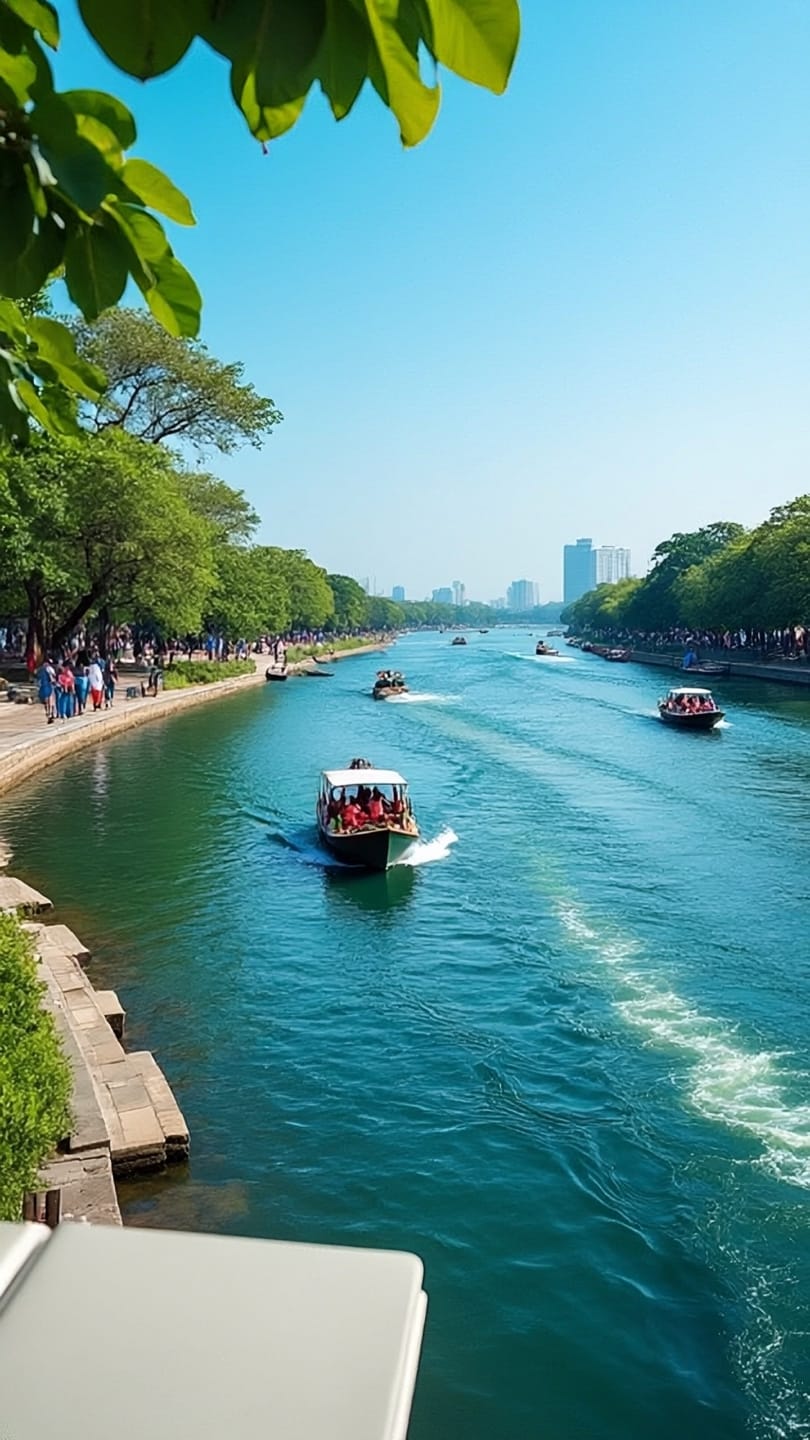
Long before the skyline existed, the river carried a different name and a different reputation — it was regarded as sacred, a place the city gathered around rather than away from.
How it got here
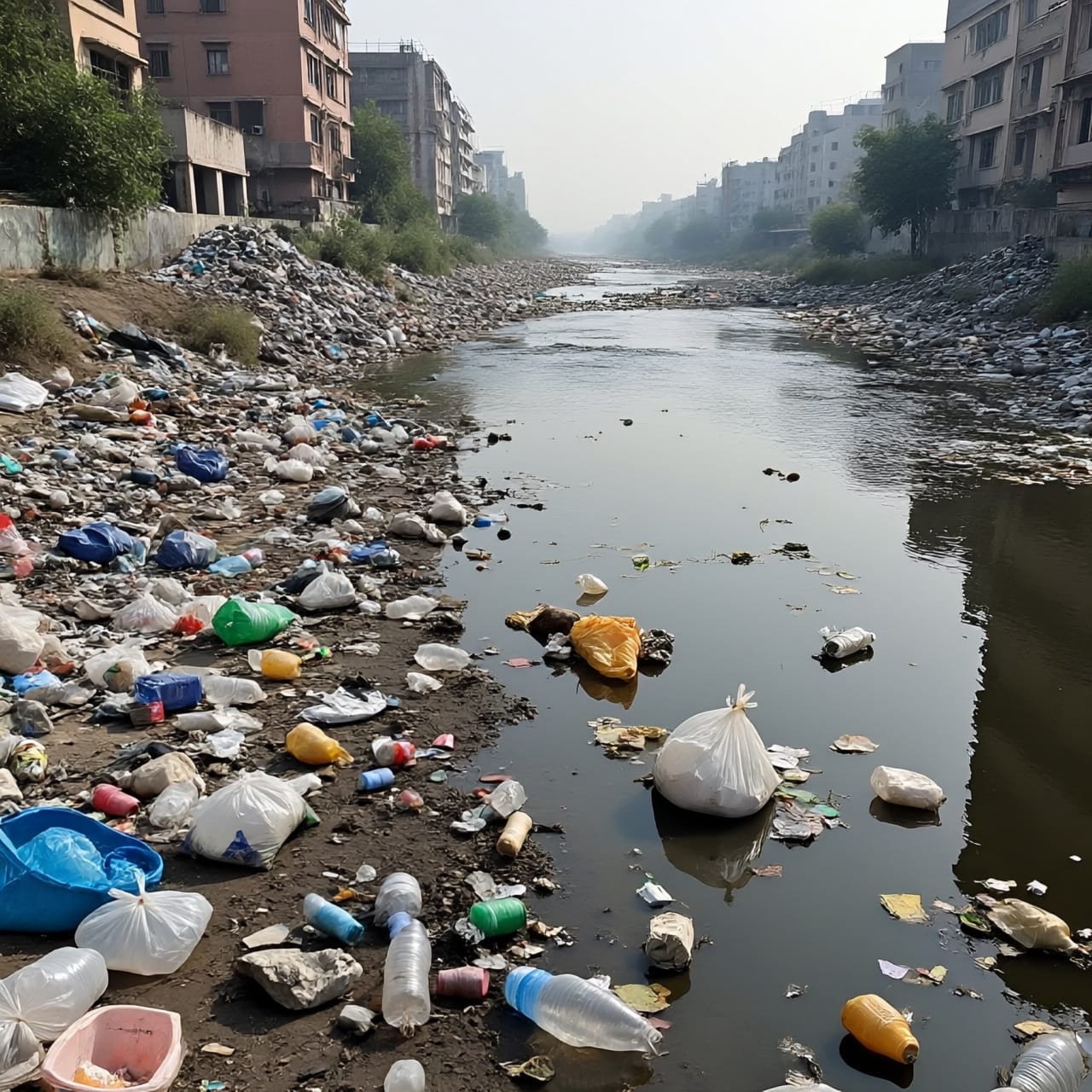
Chennai's population and built-up area grew faster than its drainage and sewage systems could keep up with. Untreated sewage outfalls, solid waste dumped straight onto the banks, and the loss of the river's natural buffer of trees and wetlands turned a working river into an open drain in the space of a few decades.
It's not a mystery, and it's not unique to Chennai — cities that urbanize quickly tend to treat their rivers as infrastructure to route around rather than public space to protect. Several government-led efforts have targeted the Cooum over the years, with real but partial progress; sewage inlets have been plugged and desilting has happened in stretches, even as new dumping keeps the problem alive.
Our mission
Chennai Blue Vision Foundation exists to keep the Cooum's restoration on the public agenda — and to show, stretch by stretch, that a cleaner river pays for itself.
Nature-based first
We favour desilting, wetlands and green buffers over concrete channels wherever the science says they'll hold up.
Community-led
Residents along the banks help set priorities stretch by stretch, not a plan drawn up once and handed down.
Self-financing
Every phase is designed to generate enough value — in land, tourism or public health savings — to help fund the next.
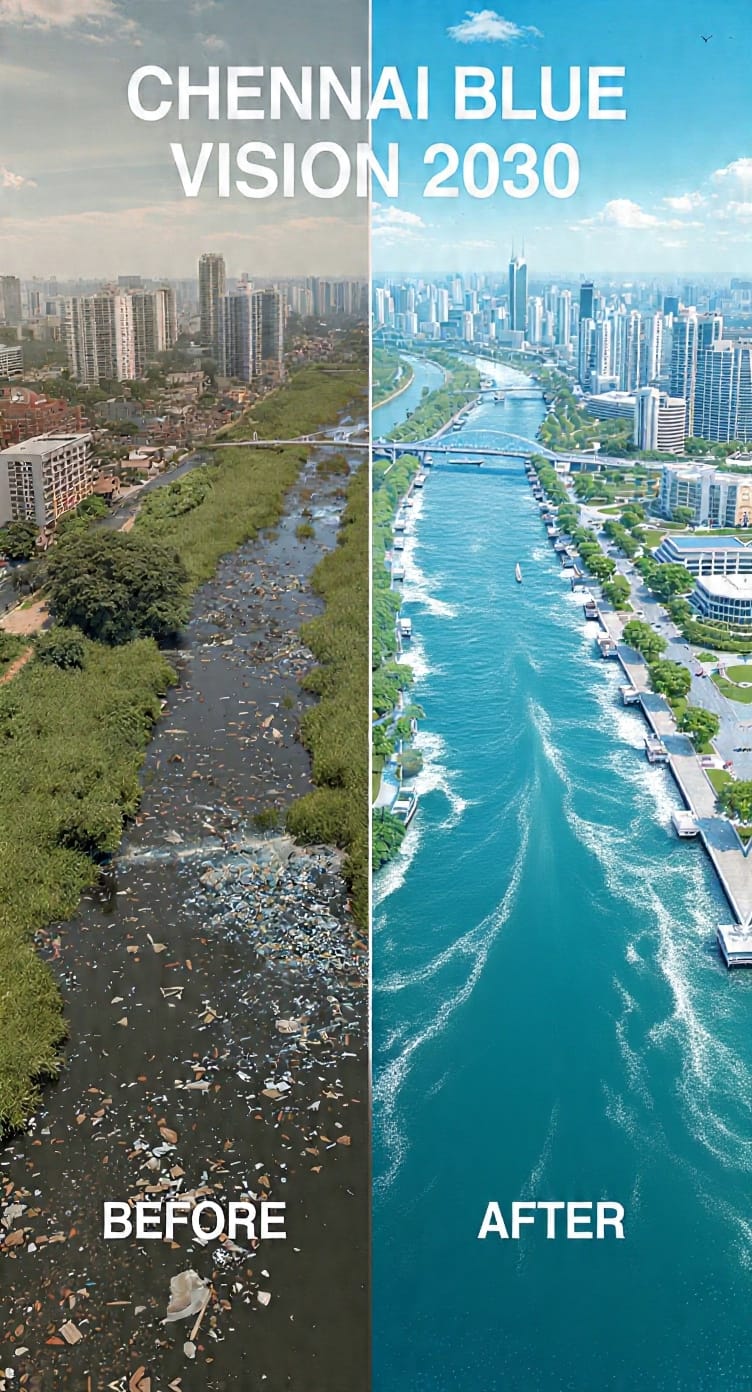
See how we'd actually get there
Three phases, mapped from source to sea.